Dissolved gas flotation
Pielkenrood designs and engineers advanced Dissolved Gas Flotation (DGF) and Dissolved Air Flotation (DAF) systems for the efficient removal of oil droplets, suspended solids and other contaminants from industrial wastewater. Our flotation technology combines precisely controlled microbubble generation with optimised hydraulic design, delivering high separation efficiency, low power consumption and reliable operation.
With more than six decades of experience in oil-water separation and wastewater treatment, Pielkenrood provides proven, tailor-made flotation solutions for demanding industrial applications.
The process
How it works
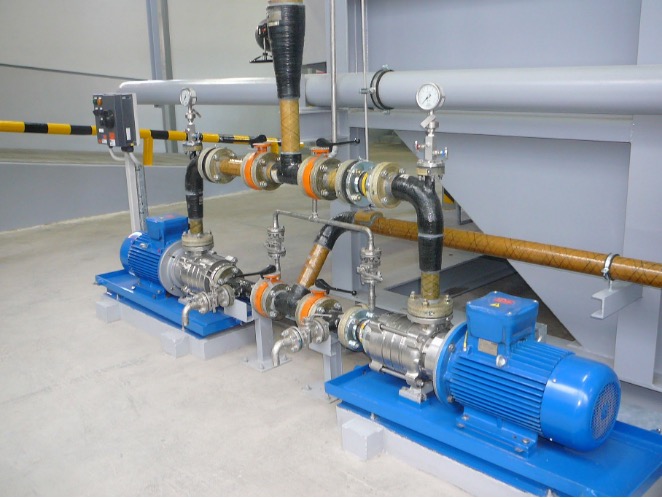
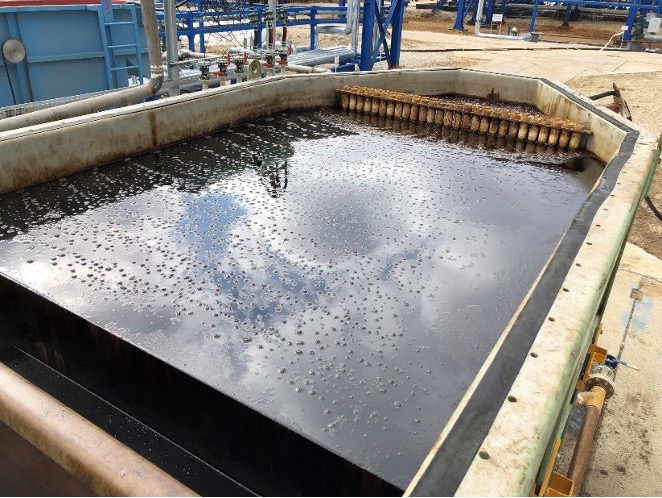
Dissolved Gas Flotation uses microscopic gas bubbles to separate contaminants from water. Part of the treated water is recycled under pressure, allowing air or gas to dissolve into the liquid. When the pressure is reduced, thousands of tiny bubbles are released.
These microbubbles attach to suspended particles, oil droplets and flocs, increasing their buoyancy and carrying them to the water surface. The resulting floating layer is mechanically removed, leaving treated water suitable for further processing, reuse or discharge, depending on the treatment requirements. Where necessary, chemical coagulation and flocculation are applied upstream to improve the removal of finely dispersed contaminants.
INNOVATION
Advanced microbubble technology
The effectiveness of flotation largely depends on the size and distribution of the gas bubbles. Pielkenrood’s DGF systems generate microbubbles, typically within a range of 10–60 microns, providing highly effective contact with suspended contaminants. Compared with conventional Induced Gas Flotation systems, our technology offers smaller bubbles, higher separation efficiency and lower energy requirements.
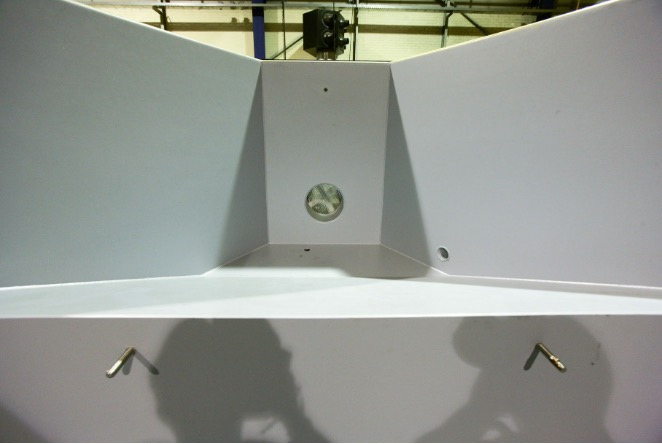
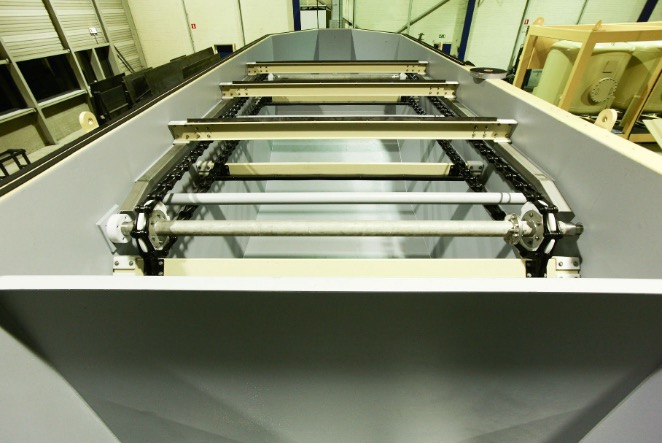
Our carefully engineered flotation chambers promote stable hydraulic conditions and minimise turbulence, short-circuiting and the unwanted settling of solids. The result is a stable floating layer and consistently high treatment performance.
stable & effective
Key advantages
- High separation efficiency: Effective removal of fine oil droplets, suspended solids and flocculated contaminants.
- Low energy consumption: Efficient recirculation and microbubble generation.
- Stable flotation process: Optimised hydraulic design creates a consistent floating layer.
- Reduced maintenance: Limited moving components and simplified operation.
- Reliable downstream performance: Effective contaminant removal reduces the load on subsequent filtration stages.
How to use
Applications
- Produced water treatment in the oil and gas industry.
- Refinery and petrochemical wastewater treatment.
- Industrial wastewater treatment.
- Removal of emulsified oil and suspended solids.
- Secondary treatment following gravity oil-water separation.
- DGF and DAF units can be supplied as standalone systems or integrated into complete water treatment plants.
expertise
Engineered for maximum efficiency
At Pielkenrood, flotation performance begins with correct process design. We carefully consider wastewater composition, operating temperature, salinity, gas selection, recirculation rates and hydraulic loading to engineer each system for its intended application. Our expertise in oil-water separation, chemical dosing and flotation enables us to develop integrated treatment solutions that deliver dependable performance while reducing energy consumption and operational costs.